
BBMP Building Plan Approval Process: Step-by-Step Guide for Homeowners
Have we ever wondered why skipping municipal clearance can sink a home project before it starts?
We will walk through what securing permission meant for homeowners inside Bruhat Bengaluru Mahanagara limits. The law required sanctioned drawings before any work began, and compliance checked zoning under the Revised Master Plan 2015.
Our guide previewed the digital route via AutoDCR, the need for a licensed architect or engineer to sign drawings, and the pillars of compliance like setbacks, FAR, height, ventilation, and parking.
We also flagged typical charges such as scrutiny fees, license fees, betterment where due, and ground rent. Budgeting these costs early helped us avoid delays and fines.
Non-compliance brought serious risks: demolition orders, denial of occupancy, penalties, and loan or resale problems. Sanctions usually carried a limited validity, so tracking commencement and revalidation kept our schedule intact.
Understanding the scope: Where BBMP building plan approval applies in Bengaluru
Before we file anything, we must confirm which civic agency governs our plot in Bengaluru. Jurisdiction decides the submission route and the checklist we follow.
How to confirm your planning authority
- Map your land or property location to determine the correct planning authority: city limits use BBMP, BDA sites follow BDA rules, and outlying areas may fall under BMRDA.
- Special zones include BIAPPA around the airport, BMICAPA on the Bangalore–Mysore corridor, and STRR inside the Satellite Town Ring Road.
- Head office handling applies for projects above 15.0 meters or where a double basement is proposed.
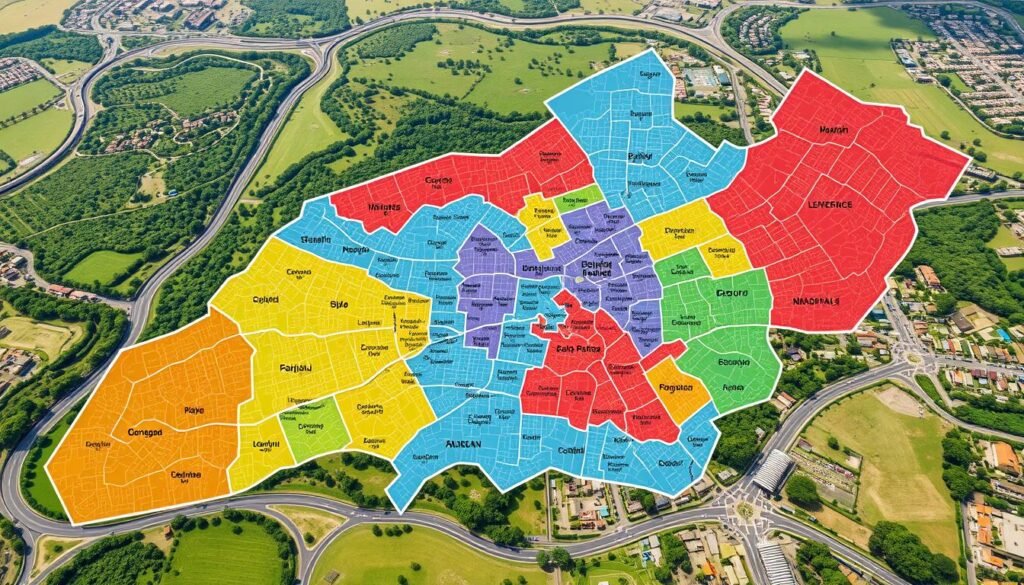
BBMP zones at a glance
We should know which zonal office reviews our submission to avoid rerouting and delays. Use the Sakala portal to track application status with your number.
| Zone | Typical Authority | When Head Office Reviews |
|---|---|---|
| East | BBMP zonal town planning wing | Height >15m or double basement |
| Mahadevapura | BBMP zonal office / local planning unit | Major deviations or mixed land use |
| Yelahanka | BBMP zonal wing or BMRDA (edge areas) | Large layouts or regional roadmap impact |
Confirming the correct authority upfront saves time and prevents rejections. We then tailor our submission to that agency’s checklist and use Sakala tracking to watch approvals progress.
Zoning, land use, and the Master Plan: Start with compliance
We begin by checking the Revised Master Plan 2015 to confirm our land use and permitted functions. This tells us whether our plot allows residential, commercial, or mixed use and guides the rest of the submission.

Reading RMP 2015 land use and zoning rules
We read the RMP map legend and note the zone code for our site. That code sets allowed uses and key limits like setbacks, floor area ratio, and height.
Residential vs. commercial use: What our plot permits
If the zoning allows only residential use, commercial activities may be restricted or limited to specified ancillary services. A mismatch with intended use will block plan approval and force redesign or conversion approvals.
Road width and plot size implications
Road width affects setbacks and maximum floor area. For example, a 40-foot road standard commonly applies for multi‑unit apartments and changes the permissible floor area ratio.
| Factor | Typical effect | Example |
|---|---|---|
| Land use zone | Permitted functions and intensity | Residential, commercial, mixed |
| Road width | Setbacks, FAR, height limits | 40-foot road needed for apartments |
| Plot size | Envelope and massing limits | 30×40 plots suit independent homes |
We document zoning notes and cite RMP clauses in our submission. That early check reduces redesign cycles and speeds formal approval.
Documents checklist to get building plan approval without delays
Missing paperwork is the most frequent reason applications return with queries. We assemble a compact file so reviewers find everything at a glance.
Ownership and core records
We gather the Sale Deed, khata, and Encumbrance Certificate to prove title and past transfers.
For converted land, we include the RTC/Pahani and recent property tax receipts showing tax paid.
Drawings and professional sign-offs
All drawings must be prepared by a registered licensed architect or engineer and be signed licensed with clear title blocks.
Only the owner or an authorized agent with a valid GPA/POA files the case. Missing signatures often trigger rejections.
| Document | Why it matters | Who signs | Common issues |
|---|---|---|---|
| Sale Deed | Proves legal ownership | Owner | Name mismatches |
| Khata / Encumbrance | Tax and charge history | Municipal records | Outdated entries |
| Tax receipts & survey | Aligns site with records | Owner / surveyor | Poor legibility |
| Signed drawings | Technical compliance for building plan | Licensed architect / engineer | Missing seals |
We also add ID, prior NOCs, soil or structural reports when required. Check legibility, consistent names, and measurements to reduce queries and speed plan approval.
Design standards that drive approval: Setbacks, FAR, height, and parking
Clear dimensional rules determine whether our design meets municipal rules or needs rework. We focus on measurable limits so our submission proves compliance at first review.
How floor area ratio and setbacks change by plot and road
Floor area ratio (FAR) and setback requirements vary based on plot size and road width. Smaller plots tolerate lower FAR and tighter site coverage, while larger developments need wider roads and higher setbacks.
| Factor | Effect | Typical change |
|---|---|---|
| Plot size | Permissible floor area and coverage | Increases with larger plots |
| Road width | Front setback and FAR uplift | 40 ft roads allow higher FAR for apartments |
| Area ratio | Overall density control | Varies based plot size and road width |
Height, ventilation, and parking norms to check early
Height limits count stair headrooms, lift overruns, parapets, and service terraces. We verify these details so measured height matches the rulebook.
- Translate parking into stall counts and ramp slope early to confirm basement headroom.
- Provide shafts and minimum window areas for natural light in habitable rooms and basements.
- Document FAR math and setback tables on drawings for quick reviewer checks.
Common pitfalls include balcony projections and corner sight-triangles. We coordinate with structural teams early to align column grids, ramps, and parking layouts to avoid rework and speed approval of our development plan.
bbmp building plan approval
We rely on a licensed architect to prepare and sign our drawings before filing. A registered professional ensures measurements, setbacks, and FAR calculations match municipal rules.
We file online through AutoDCR, upload documents, and answer queries in the portal. The sanctioned drawing comes back digitally signed and must be kept on site during construction.
- File with drawings signed by a licensed architect or engineer.
- Attach ownership records and NOCs, then respond to AutoDCR queries promptly.
- Keep the digitally signed sanction available on site for inspections.
| Fee type | When it applies | Typical note |
|---|---|---|
| Scrutiny fee | On submission | Paid online via portal |
| License fee | At sanction | Project-specific rate |
| Betterment / ground rent | Where applicable | Budget these extra charges |
Departures from the sanctioned plan risk stop-work notices, penalties, or demolition. If we need changes, we file a revised submission rather than work without approval.
Before submission, we run a final checklist with our licensed architect to check signatures, calculations, and documents. This quality review cuts resubmissions and keeps our charges predictable.
How to submit online: AutoDCR and digital plan sanction workflow
To start the digital route, we register and confirm our credentials on the AutoDCR portal. This sets our access to the online filing tools and status dashboard.
We choose the application type carefully — residence, commercial, height category, or double basement — so the right town planning track picks up the case. Head office review applies for structures above 15 m or where a double basement is proposed.
Next we prepare CAD/PDF drawings and all forms signed by a licensed architect. File names and formats must match portal rules to avoid upload errors.
- Upload drawings, annexures, and ownership documents under the correct modules.
- Pay online: scrutiny fee, license fee, and betterment charges where applicable.
- Save receipts and application numbers for Sakala tracking and audits.
We monitor progress through the dashboard and Sakala timelines. Quick responses to scrutiny comments keep our timeframes intact.
- Maintain a change log; revisions go through formal resubmission only.
- When we receive the digitally signed plan sanction and permission letter, we download and archive copies and print one for the site.
Following this workflow helps us get building plan approvals smoothly and keeps charges transparent. Timely coordination with our design team speeds the overall approval process.
Plan approval fees and charges in BBMP
Fees set the timetable for any sanction — we must know what to budget before we submit.
Typical cost items include application and scrutiny fees, license fees, development and betterment charges, and ground rent for public amenities. A labor cess of roughly 1% applies on the project estimate and we add this to our cost plan.
- Application and scrutiny fees: basic intake charges that start the online review and fund technical checks.
- License fee: charged at sanction and linked to our chosen FAR and usage category.
- Development and betterment charges: arise in certain conversions or when extra infrastructure uplift is required.
- Ground rent and taxes: payable where public amenity land or open spaces are reserved; property tax status can affect totals.
| Fee component | When it applies | What it covers |
|---|---|---|
| Scrutiny fee | On submission | Technical checks and portal processing |
| License fee | At sanction | Final permission and registry |
| Development / betterment | Where uplift or conversion applies | Local infrastructure and upgrades |
Fees will vary based plot size, usage, and proposed FAR. We estimate ranges with our architect before filing to avoid underpayment. Pay online, download receipts, attach them to the application, and check Sakala to confirm the file moves to the next scrutiny and to get the plan sanction without delay.
When NOCs are required and how to obtain them
Certain projects trigger extra clearances from utility and safety agencies that we must secure early. These NOCs tie into land use and the technical drawings we submit with the main file.
We first map which authorities our site touches and then align drawings and calculations with each agency’s checklist. Doing this in parallel with our municipal submission avoided later objections and saved weeks on past jobs.
BWSSB and BESCOM clearances for water and power
We apply to the water authority for sewer and supply connections and to the electricity utility for load sanction. These letters often require equipment locations and transformer or meter details from our engineer.
Fire Department approvals for high-rise structures
For taller projects or certain occupancies, we get a fire safety certificate. We show stair widths, hydrant locations, and evacuation routes to meet the fire norms before the final signature.
Airport Authority and Pollution Control Board where applicable
Sites near flight paths need height/no‑obstacle clearances from the Airports Authority. Heavy commercial or industrial uses may require a consent order from the State Pollution Control Board.
- Identify triggered NOCs: water, power, fire, airport, pollution.
- Coordinate NOC drawings and loads with our design engineer for consistency.
- Attach NOC letters to the main submission and track timelines alongside municipal scrutiny.
| NOC type | When required | Typical lead time |
|---|---|---|
| Water & Sewer (BWSSB) | New connections, change of use, or larger discharge loads | 2–6 weeks |
| Power Sanction (BESCOM) | New service, higher connected load, or transformer needs | 2–8 weeks |
| Fire Clearance | G+3 or above, assembly or hazardous occupancies | 4–10 weeks |
| Airport Authority | Sites in approach or obstacle zones | 4–12 weeks |
| Pollution Control Board | Commercial/industrial processes with emissions or discharge | 4–12 weeks |
Structural safety, soil testing, and stability certificates
Before we pour concrete, verifying soil and structure studies saves time and prevents costly rework.
For G+3 or taller projects, the municipality requires a set of technical reports with the submission. These prove the site and design meet statutory safety norms and avoid rejection during scrutiny.
Mandatory reports for G+3 and taller structures
We include a geotechnical report that shows bore logs and soil classification. This informs foundation choice and safe bearing values.
Structural drawings must show framing plans, sections, and member details. A stability certificate signed by the responsible engineer is mandatory.
Role of structural engineers in compliance and safety
Our structural engineer coordinates loads, column grids, and member sizing with the architectural layout. This coordination ensures constructability and code compliance.
We document seismic and wind checks where applicable and attach calculations to the file. Early review of these items reduces redesign cycles and speeds approval for taller development.
- Confirm when soil investigation and bore logs are mandatory and how foundation design uses this data.
- Provide framing plans, reinforcement details, and a signed stability certificate from the responsible engineer.
- Keep structural revisions synced with architectural updates and resubmit formally to maintain compliance.
| Document | Purpose | Signed by | Typical lead time |
|---|---|---|---|
| Soil / Geotech report | Foundation design inputs and risk assessment | Geotechnical engineer | 1–3 weeks |
| Structural drawing set | Framing, sections, reinforcement details | Structural engineer | 2–4 weeks |
| Stability certificate | Confirms overall structural adequacy | Responsible engineer | On submission |
Timelines, tracking, and Sakala status for plan approvals
A clear timeline and active follow-up are the best defenses against prolonged reviews.
We check application status on the Sakala portal using our application number. Town planning officials update milestones from scrutiny to sanction and flag queries.
Cases above 15 m or with double basements route to the head office. That routing adds extra review time, so we plan the schedule accordingly.
How to read Sakala statuses and act fast
- Understand codes: “Under Scrutiny”, “Query Raised”, “Pending NOC”, “Sanctioned”. Each code tells us the next action.
- Respond same day to queries; quick replies shorten overall time to sanction and keep approvals moving.
- Keep a log of submissions, payments, and messages to speed clarifications if reviewers ask for more details.
| Status | What it means | Our action |
|---|---|---|
| Under Scrutiny | Technical review by town planning | Monitor; prepare to answer questions |
| Query Raised | Documents or corrections needed | Provide corrected drawings or files within Sakala timeline |
| Pending NOC | External clearance awaited | Follow up with the utility or agency and attach NOC when ready |
| Sanctioned | Final sanction issued | Download documents and keep printed copy on site |
If our file stalls, we escalate to the zonal town planning team and, if needed, contact head office. We document every call and email so resolution is faster.
Setting realistic expectations for time helps us plan construction start and manage our home budget. Prompt responses preserve the project timeline and reduce cost risk.
Validity of approvals, commencement, and revalidation
A sanctioned file has a clock — if we do not begin on time, we must seek revalidation before work resumes.
Typically, municipal sanctions carry a limited validity, often around two years. If construction does not start within that window, the original approval lapses and we cannot legally proceed.
Revalidation requires updated submissions that match current bye‑laws. We upload refreshed drawings, revised forms, and any new fees or certifications the authority now requires.
When to act and what the revalidation includes
- Confirm the original sanction reference and expiry date from our documents or portal.
- Engage our licensed architect to update drawings, sign new sheets, and note any code changes.
- Submit revised files online with current fee payments and supporting reports so the revalidation is accepted.
Delays can change fee calculations or technical requirements, and a delayed property project may need additional checks. We plan procurement and mobilization to meet validity windows and coordinate with our architect for timely signatures.
Recent policy updates: Rejections tied to local planning authority approvals
A recent order changed how municipal nods link to local layout permissions and caught many applicants off guard. On October 3, the directive required that sanctioned municipal permission follow only after the local planning authority clears single-plot or layout development.
The move led to nearly 2,000 pending applications being returned for missing local sign-offs. Exemptions reduce the impact for some sites.
What changed and why rejections spiked
- The order ties our municipal sanction to prior local planning clearance for single plots and layouts.
- Many older, informal layouts lack that prior clearance, so files were rejected en masse.
Who is most affected and khata risks
Outer zones—Bommanahalli, Mahadevapura, RR Nagar, Dasarahalli, and Yelahanka—saw the biggest impact. These areas have many unregularized layouts and small land parcels awaiting formal area planning.
We must note khata risk: properties without layout clearance can face A‑Khata to B‑Khata reversals during transfers. That change can affect due diligence, resale, and property tax assessments.
Practical steps to navigate the new requirement
- Verify local planning or planning authority approvals for your layout before filing with the municipal office.
- Gather exemption evidence—CTS numbers, transfers entered in A‑Khata, BDA approvals, prior sanctioned plots, or government allotments.
- Seek legal or planning advice for edge cases and to avoid repeated rejections or extra charges.
| Issue | Who is exempt | Quick action |
|---|---|---|
| Missing layout clearance | CTS, BDA, KHB/KIADB sites | Obtain local clearance or exemption proof |
| Khata reversal risk | Transfers from CMC/TMC/GP in A‑Khata | Verify khata status before transfer |
| Pending applications | Prior sanctioned plots seeking revision | Submit revision with proof of prior sanction |
Common mistakes that lead to plan rejection and how we avoid them
Small technical mistakes often trigger the biggest delays when we submit documents for municipal scrutiny. We focus on simple checks that stop rejections before they start.
We first verify land use so we never file a residential building plan on a non-residential plot. Next, we confirm road width and plot size on the site sketch and match those figures with survey and title documents.
Typical technical and documentation errors
- Incorrect setbacks or FAR miscalculations — we double-check tables and show the math on drawings.
- Missing NOCs (water, power, fire, airport, pollution) — we get these early and attach them to the file.
- Unpaid property tax — we clear dues and include tax paid receipts to avoid holds.
- Unsigned sheets — every page must carry signatures and the registered professional’s seal to pass scrutiny.
- Khata mismatches — we reconcile khata status with layout approvals or exemptions before filing.
| Common mistake | Why it fails | Quick fix |
|---|---|---|
| Wrong land use | Zoning mismatch | Confirm land use from local map |
| FAR/setback errors | Arithmetic or interpretation faults | Attach calculation sheet |
| Missing NOC or tax paid | Administrative hold | Collect NOCs and receipts before submission |
We run a short pre-submission checklist and internal QA. This helps our file pass the first-level scrutiny and speeds building plan approvals for our project.
Conclusion
In closing, practical due diligence protects our timeline and budget for any municipal submission.
We recap essentials: zoning alignment with RMP 2015, compliance with local bye‑laws, complete digital filing, and the right NOCs and structural reports for taller work. These steps help secure building plan approval efficiently.
Validate local layout permissions or exemptions before spending on detailed drawings and fees. Work with a licensed design team so signatures and standards reduce queries and rework.
Budget for scrutiny, license charges, betterment or ground rent, and labor cess. Track progress through Sakala and answer queries quickly to keep momentum.
Finally, use a brief due‑diligence checklist covering land records, khata status, plot size and road width, required NOCs, and structural thresholds to avoid delays in Bruhat Bengaluru.