Khata Certificate & Property Documents Needed for Home Construction in Bangalore
Have you ever wondered why a clear record with the municipal body matters more than the walls you build?
We explain how getting your property recorded with the Bruhat Bengaluru Mahanagara Palike affects taxes, loans, and legal approvals. For newly finished building work, the BBMP often checked that the site matched approved plans and had an Occupancy/Completion Certificate before issuing an entry.
We map the documents you must have ready, the ward or online steps to follow, and the typical verification checks that can slow the process. Our guide shows when to present each paper so you avoid repeated trips to the office.
In short, we lay out a process-driven path to register your property, reduce back-and-forth, and secure a legal record that lets you pay taxes, apply for loans, and transact with confidence.
Understanding BBMP Khata and Why It Matters for New Construction
An accurate municipal property entry determines whether you can pay taxes, get approvals, or use your asset as loan security.
We define bbmp khata as the official property account that records ownership, address, property size, and outstanding tax status. This entry becomes the council’s reference for property tax and any later approvals.
What the record covers
The municipal account lists owner name and title details. It also captures the plot’s measured area and exact location. These items must match your title papers to avoid verification rejections.
How it enables next steps
- With a correct entry you can pay property tax and request building and occupancy approvals.
- Lenders accept the municipal record when assessing loans and legal title.
- Missing or mismatched data — misspelt names, wrong property size, or incorrect location — delays permissions and downstream utilities.
| Record element | Why it matters | Common error |
|---|---|---|
| Ownership | Needed for sale, rent, and loan checks | Name mismatch |
| Area | Used to compute tax and approvals | Incorrect measurement |
| Location | Links utilities and ward actions | Wrong address or ward |
khata certificate bangalore construction: User Intent and What We’ll Achieve
We map the exact path from your finished build to an official municipal entry so you know what to file and when.
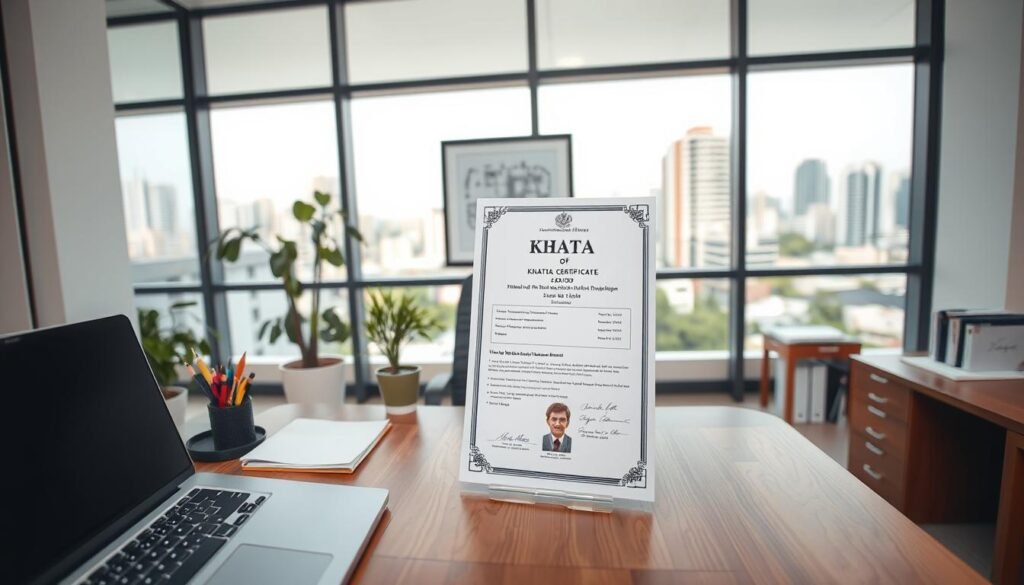
Our outcome is simple: a clear, actionable route from completion to the municipal record in hand. BBMP expects the work to match approved plans and to have an OC/CC before processing starts.
We explain whether to use a ward-level application or the e-AASTHI portal. Both routes require verification and an on-site inspection. Choosing the right route depends on your readiness with documents and timelines.
- Scope: guide property owners from final build stage to a successful municipal entry with minimal delays.
- Sequence: list each application step, touchpoint, and expected action by BBMP staff.
- Checklist: collect title, tax receipts, identity, and plan details before you apply.
| Milestone | Who acts | Typical time |
|---|---|---|
| Application filed | Owners / Agent | 1–7 days |
| Inspection & verification | BBMP inspector | 7–21 days |
| Entry issued | BBMP processing | 7–30 days |
We also outline owner responsibilities — signatures, presence for inspection — and what we can manage with proper authorization to speed approval and ensure property metadata is accurate for taxes, loans, and future transfers.
Before You Apply: Build Compliance and Occupancy/Completion Certificates
Before you file any municipal forms, confirm the finished building matches approved plans and local bylaws.
Meeting BBMP bylaws and approved plans
We verify that the property follows sanctioned drawings and BBMP regulations. This includes built-up area, setbacks, and floor count. We check plan approvals and compare them with as-built documents.
- We confirm the building adhered to sanctioned drawings and bylaws before starting the process.
- We align structural attributes to approved records to avoid violations that stall applications.
- We prepare plan approvals, site photos, and as-built confirmations to smooth inspection.
When and why an Occupancy/Completion Certificate is essential
An Occupancy/Completion Certificate proves the property is fit for use and meets BBMP guidelines. We obtain or verify this document because it is usually required for a municipal entry.
| Requirement | Why it matters | Our action |
|---|---|---|
| Plan match | Prevents plan violations | As-built verification with architect |
| OC/CC | Confirms habitability | Obtain or validate before submission |
| Timeline alignment | Avoids idle waits | Map OC/CC readiness with application |
Core Property Documents We Prepare for BBMP Khata
Gathering the right title and identity papers upfront prevents repeated office visits and delays.
Ownership and title
We compile your registered sale deed or equivalent registered title document to prove clear ownership.
We also collect the title deed and any supporting deed records that show transfer history.
Tax compliance
We organise the latest property tax receipts and SAS details to prove taxes are paid and the account is active.
Note: BBMP’s Oct 30 update says an Encumbrance Certificate is not mandatory only to apply for e-khata, but EC still matters for registration and mutation.
Identity and property particulars
We prepare Aadhaar eKYC and PAN to match names across records.
We capture property size, address, and schedule so the municipal entry reflects exact particulars.
- Validate Completion/Occupancy Certificate and compliance documents before submission.
- Checklist every document and correct upload formats for ward or e-AASTHI filing.
| Document | Purpose | Note |
|---|---|---|
| Registered sale deed | Proves ownership | Primary deed for title |
| Encumbrance Certificate | Shows liens | Not mandatory for e-khata application |
| Property tax receipts | Tax compliance | Must match BBMP records |
We check every document and submit a complete pack so your municipal entry proceeds without avoidable queries.
Step-by-Step: Applying for BBMP Khata at the Ward Office (Offline)
Filing at the BBMP ward is a hands-on process that relies on exact paperwork and on-site proof. We visit the local bbmp office, submit a completed form, pay fees, and follow the verification path until the municipal record is entered.
Filing the application form, document submission, and verification
We collect, fill, and file the application form at your ward office with all supporting documents in the prescribed order.
At submission we pay the processing fee and keep stamped receipts and diary numbers for tracking.
On-site inspection expectations and how we prepare
BBMP officials will likely schedule an on-site inspection to confirm the property matches approved plans.
We accompany inspectors, present plans, photos, and measurements, and respond to queries to avoid follow-up visits.
- We lodge the form and supporting files in order and retain copies of every stamped page.
- We schedule and attend site verification with calibrated measurements and plan sets.
- We monitor the application docket, note caseworker clarifications, and clear them promptly.
| Milestone | Who acts | Typical time |
|---|---|---|
| Application submitted | Owners / Agent at ward office | 1–7 days |
| Inspection & verification | BBMP inspector | 7–21 days |
| Entry processing | Ward caseworker | 7–30 days |
Step-by-Step: Applying for e-Khata on the e-AASTHI Portal
Start your e-AASTHI application by logging in with a mobile OTP at https://www.bbmpeaasthi.karnataka.gov.in/ and locating the draft record tied to your mobile or property ID.
Locating and completing the draft
We search the draft by owner name or by property ID. Drafts cover about 21 lakh properties, so a quick lookup often succeeds.
We then enter missing details: sale deed data (Kaveri 2.0 pulls post‑Apr 1, 2004 deeds), Aadhaar eKYC, PAN, SAS application number, and BESCOM 10‑digit connection number.
Matching with Kaveri and BESCOM
The portal auto-checks names and deed info against Kaveri and BESCOM. If all identifiers align, verification is instant.
Mismatches route the record to the ARO for manual review. We validate documents in advance to reduce escalations.
- We upload title docs for pre‑2004 entries and ensure scans are legible.
- We add clear GPS coordinates and recent photos of the property and owner.
- We advise on raising objections within seven days if a draft shows a dispute.
What the final e-document shows and the download step
The final e-file includes an e-property ID, owner and property photos, GPS geotags, and the schedule of measurements.
After we confirm the details, we pay the ₹125 fee to download the completed khata and present it to the ARO for final acceptance.
| Item | What to upload | Note |
|---|---|---|
| Sale deed | Kaveri fetch or scanned deed | Post‑2004 auto‑fetch preferred |
| Utilities | BESCOM 10‑digit number | Matches speeds verification |
| IDs & proof | Aadhaar eKYC, PAN, photos, GPS | Legible uploads avoid ARO queries |
Fees, Processing Times, and Verification Milestones
Understanding the likely costs and review steps lets us plan realistic timelines and avoid surprises.
Charges and typical turnaround
Offline submissions can incur a processing fee that varies by plot size and ward. For e-filings, the e-khata download carries a ₹125 fee. We list all expected costs at submission so there are no unexpected bills.
How BBMP reviews escalate files
BBMP reviews digitized entries in stages. Caseworkers check every file. A portion moves up to Revenue Inspectors and the ARO, with smaller shares reaching senior officers up to the Joint Commissioner. This layered review affects timelines, which can range from weeks to months depending on inspections and escalations.
- We confirm property taxes are current so fiscal checks do not block the certificate.
- We reconcile your documents with municipal records to prevent mismatches.
- We track milestone progress in the ward office and escalate when SLAs slip.
| Review stage | Share of cases | Typical time |
|---|---|---|
| Caseworker | 100% | 1–4 weeks |
| Revenue Inspector / ARO | 25% / 15% | 2–6 weeks |
| Higher officers (RO, DC, JC) | 10% / 5% | 2–8+ weeks |
A Khata vs B Khata: Eligibility, Compliance, and Conversion Pathways
Not all municipal entries are equal — some allow full use and finance, while others restrict transactions. We explain who qualifies for an A entry, why some properties sit in a B entry, and how to move from one to the other.
Who qualifies for an A entry
An A entry shows compliance with land use, correct zoning, approved building plans, clear title, and up-to-date taxes. Lenders and permit authorities accept A entries for loans and approvals.
Converting a B entry to A
B entries typically record unauthorised layouts, bylaw violations, or revenue records that need regularization. These entries limit finance, permits, and lawful transfer.
- Clear outstanding taxes and improvement charges.
- Secure plan approval or file regularization with supporting drawings.
- Submit an application with registered title documents and tax receipts.
- Undergo field inspections and pay conversion charges as assessed.
| Step | Action | Outcome |
|---|---|---|
| Compliance check | Confirm zoning, plans, and taxes | Ready for filing |
| Application & payment | Upload deeds, receipts, approvals | Case moves to inspection |
| Field verification | Inspector confirms site and documents | Issuance of A entry; loans and transfers enabled |
We assemble the proofs, manage payments, and respond to verification queries so your property is ready for transfer, lending, and future development. Post-issuance, we advise ongoing compliance to protect status against future disputes.
Common Pitfalls We Avoid to Keep Your Application Moving
A short checklist fixed before submission saves days of rework and inspector queries. We focus on the few recurring issues that stop progress and trigger ARO reviews.
Incomplete documentation and mismatched owner details
Missing papers or name mismatches between the deed, Aadhaar, tax receipts, and utility accounts are the top cause of auto‑verification failures. We reconcile owner identifiers and keep one master copy of every document before upload.
Outstanding taxes and plan violations
Unpaid tax dues or building plan variances lead to holds and inspection objections. We clear liabilities and, where needed, arrange regularization or corrective steps before we file the application.
- Reconcile owner names across deed, Aadhaar, tax receipts, and BESCOM to avoid digital flags.
- Verify every document is legible, current, and properly registered.
- Prepay outstanding tax amounts and settle penalties to remove compliance blocks.
- Prepare boundary schedules, measurements, and plan clarifications in advance.
- Sequence the process so dependencies are met and rework is minimised.
| Issue | Action we take | Outcome |
|---|---|---|
| Name mismatch | Cross‑check IDs and deed | Passes auto‑verification |
| Missing document | Compile and scan originals | No rejection at submission |
| Plan non‑compliance | Coordinate regularization | Inspector objections cleared |
Keeping one source of truth for application details lets us move the process faster and reduces queries from caseworkers.
Special Scenarios: Older Village Records, Draft Errors, and Builder Bifurcation
Some merged village properties fall outside the digital roll and need extra steps to enable transfer. We handle these legacy cases with an alternate filing path and focused follow-up.
Properties outside digitized registers
Many plots from the 110 merged villages are not in the digitized register. We route these properties through the special e-AASTHI module that accepts the registered sale deed and supporting papers for registration.
We also coordinate with the ward and the bbmp office to fill legacy gaps and align records with current use.
Draft e-draft errors and objections
Draft name or address errors can block issuance. Within the objection window we prepare a formal letter to the ARO and attend hearings with ID, deed, and tax proofs.
We track the BBMP’s planned correction module and manage interim fixes so transfers proceed without longer holds.
Apartments: land bifurcation and transfer
Builders must bifurcate the land entry and transfer plots to individual flat owners. When they delay, e-khata transfer and mutation stall.
We work with builders, resident associations, and the office to complete khata transfer and preserve clear title for each owner.
- Route non-digitized properties through the alternate e‑AASTHI module.
- File objections to the ARO for draft disputes and attend hearings.
- Manage name/address discrepancies and monitor the correction module.
- Coordinate builder-led land bifurcation and khata transfer for apartments.
- Escalate digitization backlogs to bruhat bengaluru mahanagara and mahanagara palike contacts when needed.
| Issue | Our action | Outcome |
|---|---|---|
| Legacy village record | Alternate e-AASTHI filing with deed | Registration proceeds |
| Draft name/address error | Objection to ARO, hearings | Correction or formal note |
| Builder-held land | Bifurcation & transfer coordination | Individual transfer completed |
Conclusion
When municipal records match your deeds and utilities, transactions and loans move far more smoothly.
We close the loop with a clear process that ends in a valid khata certificate ready for taxes, loans, and transfer. e‑AASTHI now supports e‑khata downloads with a ₹125 fee and cross‑database checks against Kaveri and utilities.
We verify e‑khata details and advise ARO verification for any sale, application, or loan step that follows. We also keep property records aligned across BBMP, Kaveri, and utility accounts to simplify future filings.
After issuance, we offer post‑release help for corrections, bifurcations, and legacy cases. We monitor BBMP digitization updates so your properties stay compliant and property taxes remain current.